


Hardwood Flooring Installation:
Install Wood Flooring for a Classic, Warm Atmosphere in Your Space
Hardwood flooring installation transforms your space with warmth, structure, and lasting value. When you install hardwood flooring correctly, you create a durable new floor that enhances comfort and resale appeal. This service focuses on professional assessment, precise preparation, and careful installing techniques suited to each wood species and environment. From removing any existing surface to final detailing, every flooring project follows a structured installation process that protects structural integrity and long-term performance. Whether you want to install wood flooring in a home or commercial setting, the right approach ensures your hardwood floor performs under daily foot traffic while maintaining visual consistency.

Hardwood Flooring Installation Explained By Experienced Floor Specialists
Professional hardwood flooring begins with understanding the space, structural layout, and intended use. A hardwood floor must sit securely on a properly assessed base to prevent movement over time. Hardwood flooring can be installed using different systems depending on site conditions, plank dimensions, and moisture exposure. Specialists evaluate floor joists, level consistency, and environmental factors before installing any materials.
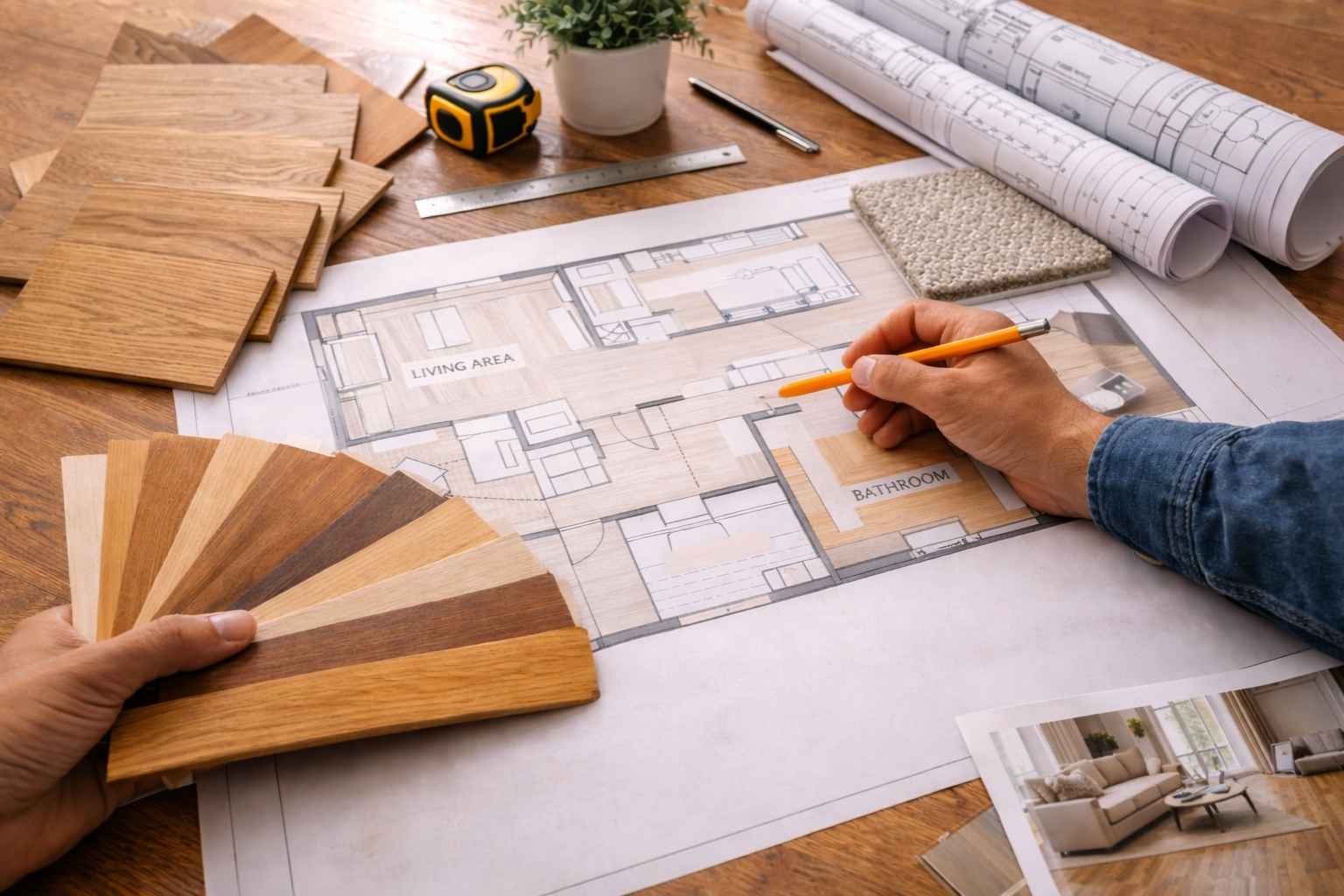
The installation process involves measuring the room, marking reference points, and planning plank direction to achieve visual balance. Careful planning supports durability while reducing risk of future movement. Each hardwood floor receives tailored attention, ensuring the chosen type of flooring suits both lifestyle demands and architectural style.

Choosing Between Solid Hardwood Flooring And Other Hardwood Floor Options
Solid hardwood flooring remains a trusted choice for those seeking long-term value and authentic texture. Solid hardwood offers thickness that allows refinishing over time, while engineered alternatives provide stability in certain conditions. Selecting the right hardwood floor depends on traffic levels, climate, and interior design goals.
Different wood types influence colour, grain pattern, and overall performance. A hardwood solution can range from wide hardwood planks for contemporary spaces to narrower plank formats suited to traditional layouts. When planning your flooring project, you must weigh durability, finish preference, and maintenance expectations before committing to one hardwood floor system.
Preparing The Subfloor Correctly Before Installing A Wooden Floor
Subfloor preparation determines whether your wooden floor will perform consistently over time. Before installing, professionals remove any existing flooring and inspect the subfloor for levelness, moisture, and structural stability. This stage may include filling holes with wood filler, sanding uneven sections, and ensuring the base remains dry.
Contractors make the installation damp-proof by testing moisture levels and adjusting for temperature and humidity. Proper subfloor preparation protects your hardwood from movement and reduces the risk of wood splinters caused by shifting boards. Careful evaluation ensures the base supports the chosen hardwood floor securely.
Understanding Installation Method Choices For Wood Floor Performance
Every wood floor requires a suitable installation method based on layout and structural demands. Professionals may recommend floating installation, glued-down installation, or mechanical fixing with a flooring nailer. Installing a floating system involves creating a floating floor that rests above the subfloor without permanent fixing.
The installation method affects acoustic performance, stability, and expansion management. Solid wood typically requires secure fastening, while some modern flooring products use a click system that simplifies alignment. Choosing the correct method ensures your hardwood floor withstands daily use while maintaining structural integrity.
Glued-down Installation And Other Professional Wood Flooring Installation Techniques
Wood flooring installation techniques vary depending on plank thickness and substrate conditions. In glued-down installation, professionals apply adhesive directly to the subfloor and lay the planks carefully to maintain alignment. Wood glue may also support specific joints where required.
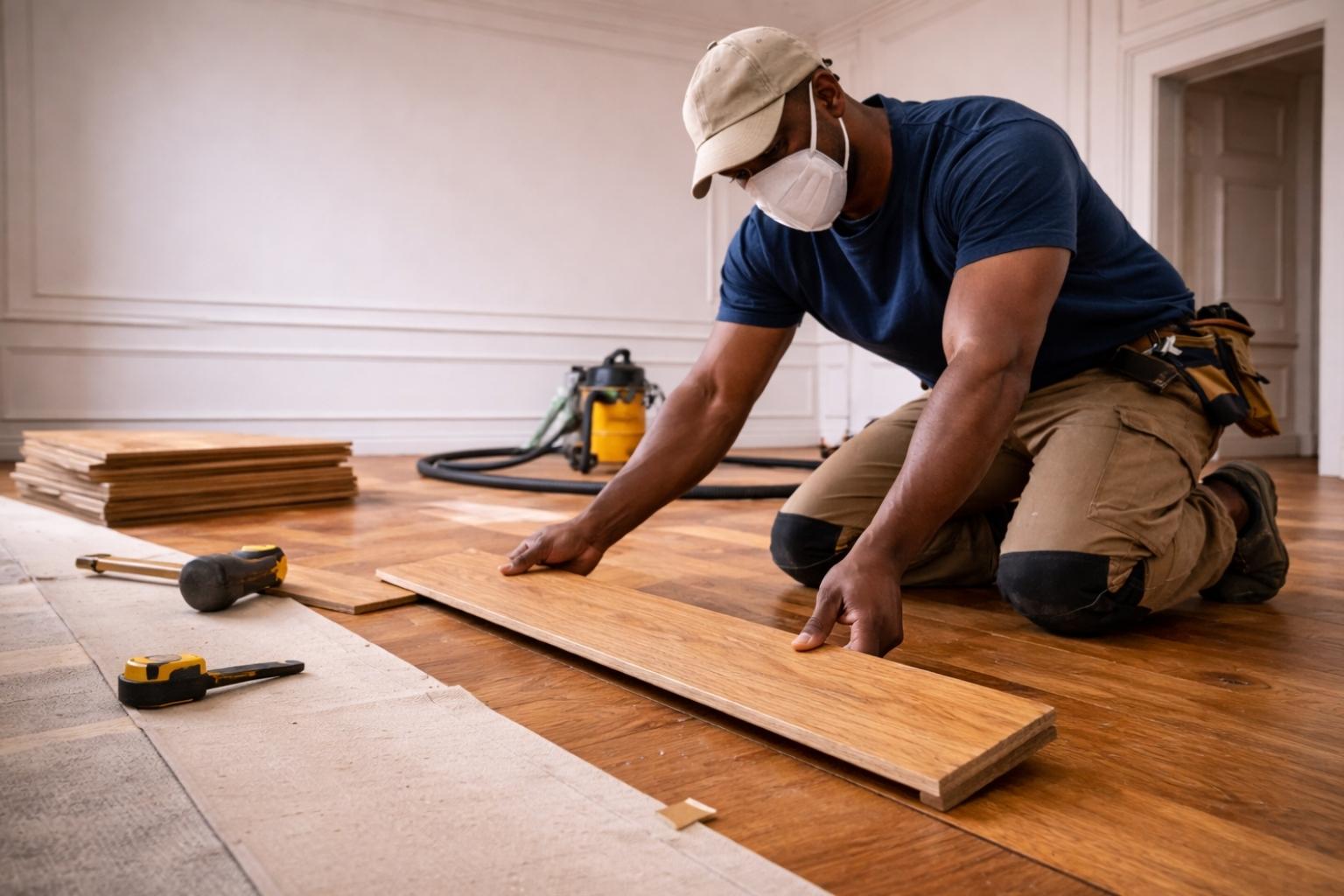
During laying the planks, installers lay the first row along the longest wall and use spacers to maintain the expansion gap. The first row sets the reference for the rest of the room. Installers click the first plank securely, then continue with the second row while staggering end joints to improve strength. Each row of boards must align accurately in order to make the installation stable and visually balanced.
Spacers to maintain the expansion gap ensure the hardwood floor can expand naturally. Professionals maintain the expansion gap along the perimeter and check alignment across rows of planks before fitting the last plank. They attach the rows together securely, ensuring plank joints sit flush and stable.
1
Planning Your Flooring Project For Long-term Durability And Visual Impact
A successful flooring project requires more than selecting hardwood planks. You must calculate floor installation cost, evaluate foot traffic patterns, and choose a finish suited to your environment. Professionals draw your cutting lines precisely before installing to minimise waste and ensure accuracy.
When installing, teams use adhesive tape to attach underlay sections if needed, ensuring stability during positioning. They keep your hardwood protected during the process to avoid surface damage. With careful planning, clients can enjoy a wooden floor in no time, knowing the installation supports durability and aesthetic value.
2
Why Choose The Dustless Floor Sanding Company For Hardwood Flooring Installation
The Dustless Floor Sanding Company delivers a complete flooring solution backed by experience and technical expertise. Each hardwood floor receives structured planning, professional tools, and attention to detail from start to finish. The team understands how solid hardwood behaves under environmental pressure and adjusts installing techniques accordingly.
Their specialists ensure expansion management, plank alignment, and finish quality meet professional standards. Whether you want to install hardwood flooring in a new development or replace existing surfaces, the company focuses on precision, stability, and long-term performance.
Frequently Asked Questions About Hardwood Flooring Installation
Clients often ask whether diy installation is advisable. Professional installing reduces risk and ensures correct handling of plank spacing and expansion. Others ask how to maintain the expansion gap or which wood species performs best in high-traffic areas.
Questions also arise about how to remove any existing surface safely, how to fill holes with wood properly, and how long hardwood flooring installation takes. Expert guidance ensures each hardwood floor remains stable, durable, and visually consistent for years to come.